
A.i.R. Story
atem
Beate Frommelt × Philipp Zünd · A.i.R. Story
The Encounter
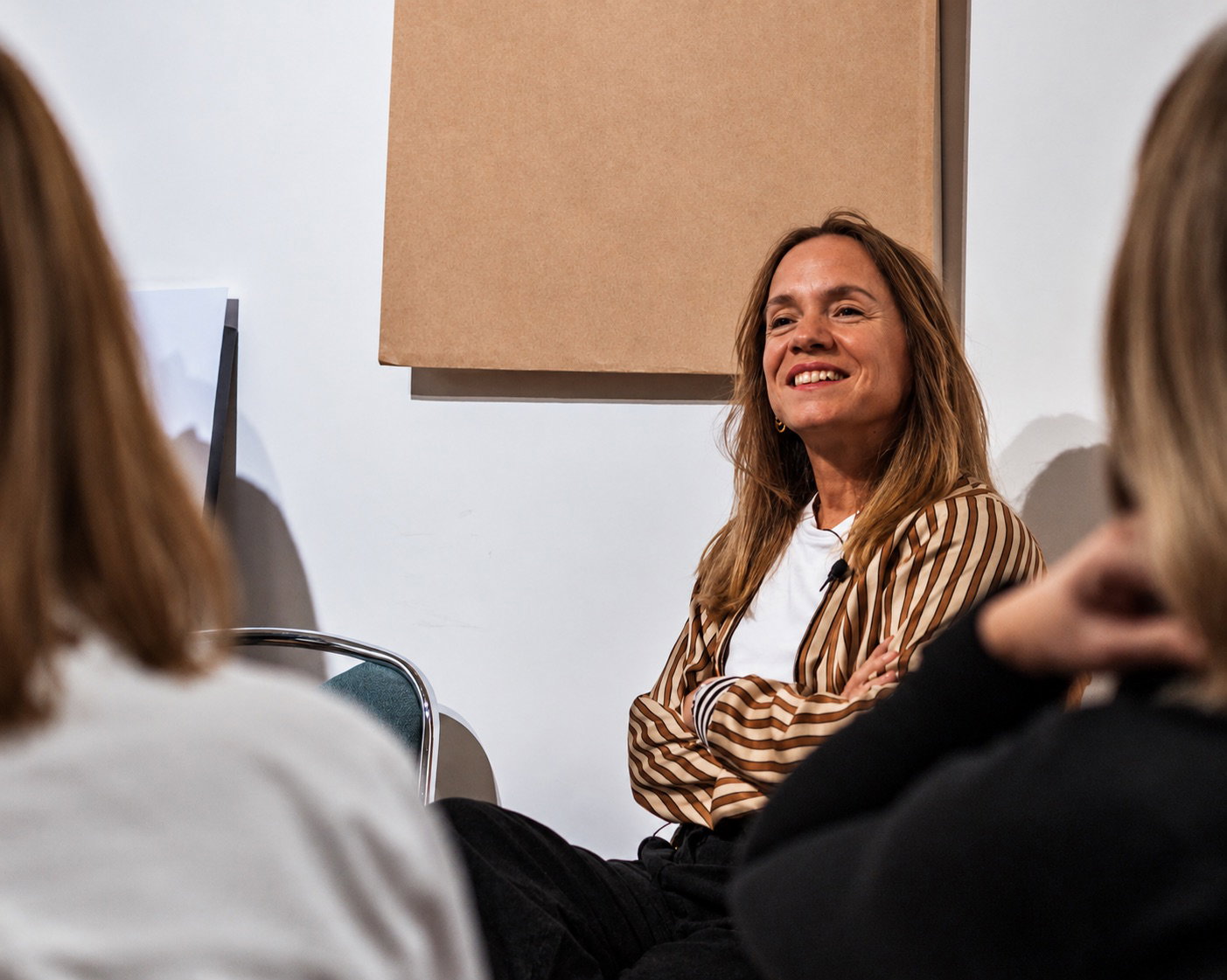
Beate’s A.i.R. Session was a special experience for me. Discovering her essence was a very intuitive process. Perhaps also because so much of it resonated deeply with me.
As we talked, I increasingly had the impression that Beate approaches changes in her life with a remarkably balanced and determined attitude. Not because she has never experienced crises. Quite the opposite. She spoke about challenges, some of them intense.
But there seemed to be something within her that kept restoring balance, and I wanted to understand where that sense of equilibrium came from.
Reflection: Four Poles
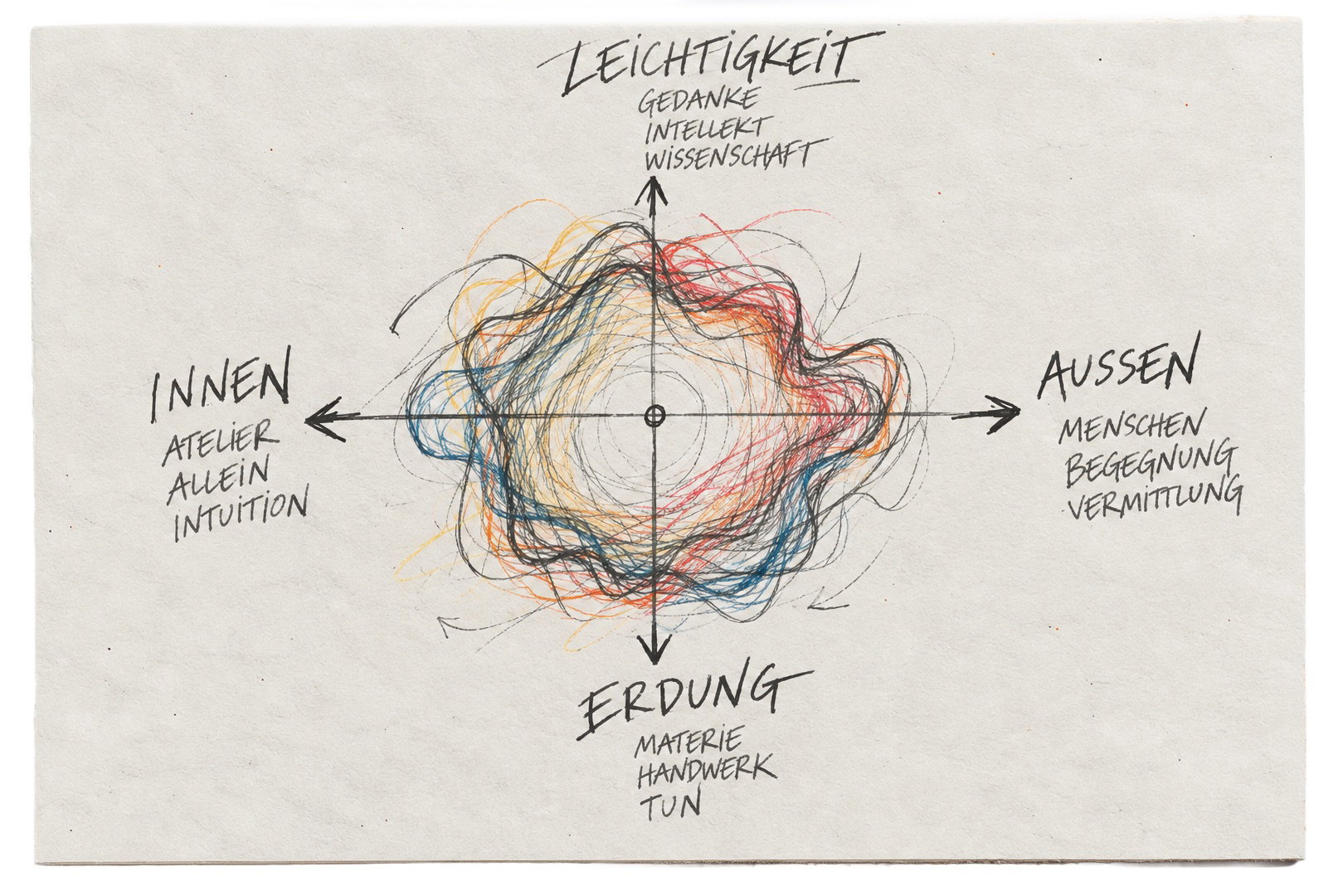
Over the course of our conversations, four poles began to emerge that Beate seems to hold within herself.
On the vertical axis, there is lightness at the top: air, the intellectual, thinking, academic exploration.
At the opposite end, below, are groundedness and the material world. Tactility, craftsmanship, doing, fire.
On the horizontal axis, one side represents the inner world. Beate’s own space. Her studio, where she enjoys working alone. She told me that she already loved doing this as a child. An important clue to what might be called her “innermost truth”.
On the other side lies the outer world. Encounters with people, her educational work with children, older people and people with disabilities. What matters to her there is making art accessible in different ways. Not simply explaining it, but making it tangible, something that can truly be grasped.
Beate continually moves between these four poles. Between inner and outer worlds, between mind and action. Between lightness and groundedness, between concentrated work alone and exchange with other people.
I suspect that this is also where her sense of balance comes from.
“Just as humans need air to breathe and fish need water to live, we need creativity. Like a bellows, with every breath we rekindle our inner fire.”
Distillation: The Generator
After one or two hours, our Post-it wall looked almost like an oscillator.
Like a waveform made up of many lines gradually condensing into a circle. Not a geometrically perfect circle, but something fluid, shifting and alive. A form that is constantly changing shape and yet still holds together.
Almost like a waterwheel, or a generator. This generator became an image for Beate’s inner movement.
What fascinated me most was this: her balance does not seem to come from stillness, but precisely from the constant movement between these poles.
It is not remaining in the centre that keeps her in balance, but movement itself.
At some point, we began comparing this generator to a heart. Something that pulses. Contracts and opens again. Something essential to life.
And that brought us to breath.
Breathing in and breathing out. Receiving and releasing. Opening up and returning to oneself.
I could relate to this very directly. I experience a similar cycle in my own meditation. When I breathe in, I feel as though I am receiving something from the air, from the space around me, perhaps even from the universe. When I breathe out, I become aware of my body and of being grounded.
Suddenly, this simple process connected with our four poles. Creativity seemed to have a similar meaning for Beate as breath has for us as human beings.
It keeps her inner movement alive, and our thinking gradually condensed into one simple sentence:
Creativity is breath.
Manifestation
This idea became the starting point for our shared poster.
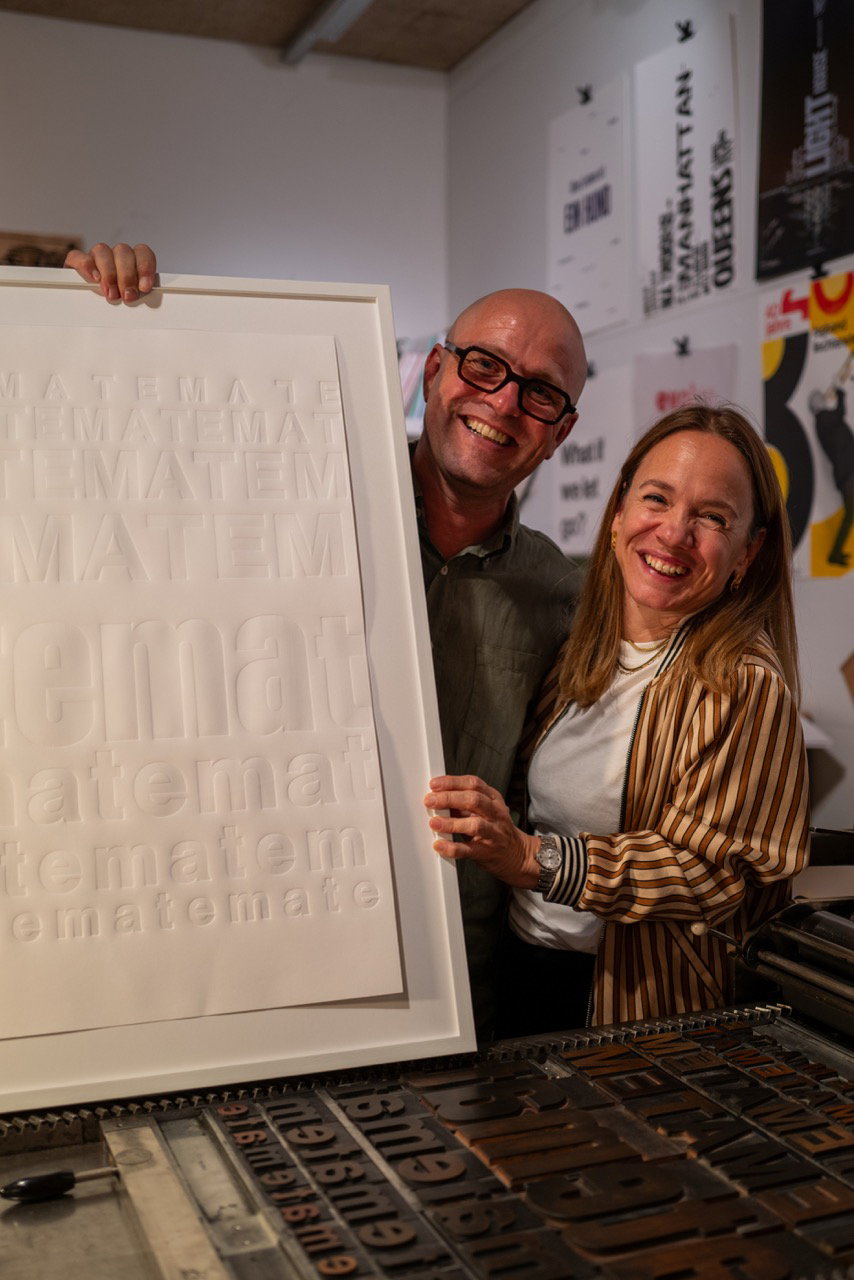
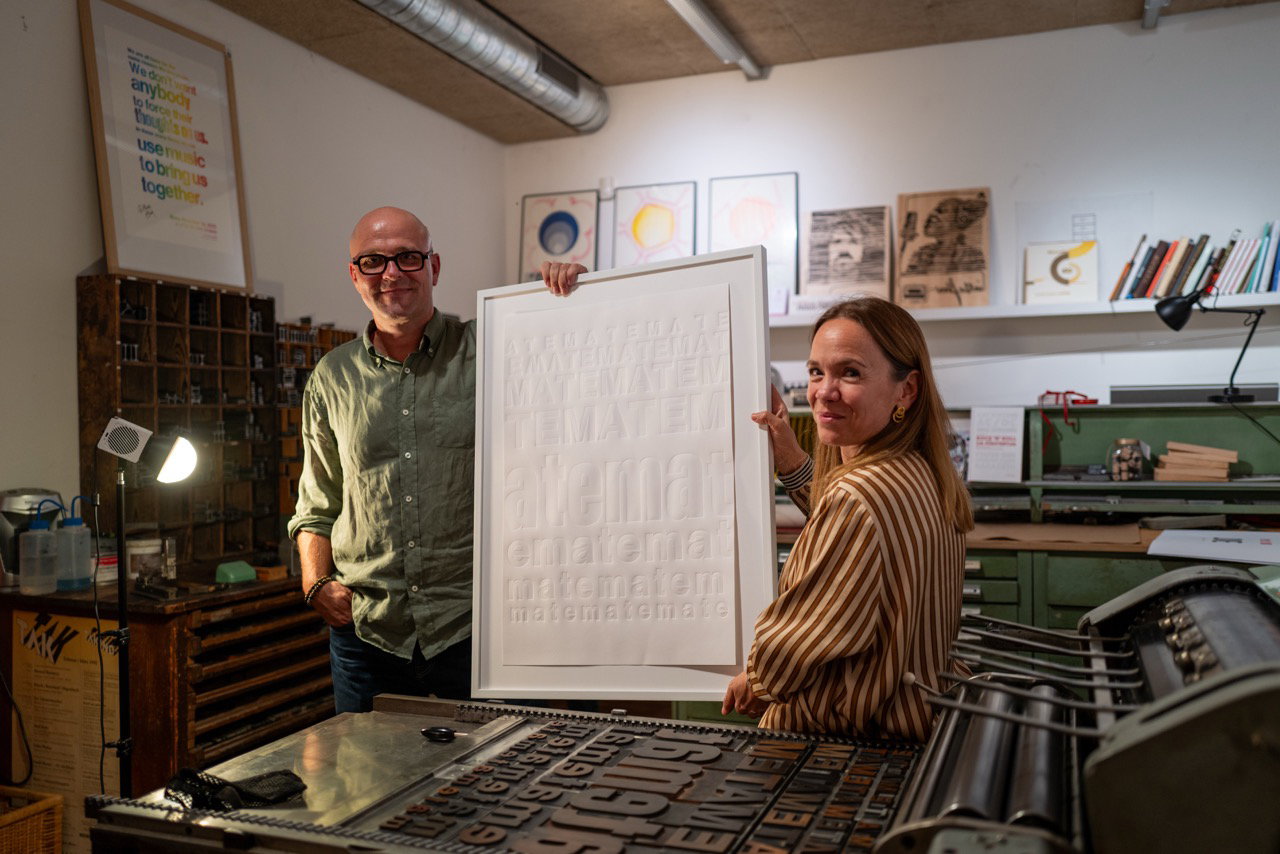
An artwork consisting of a single word:
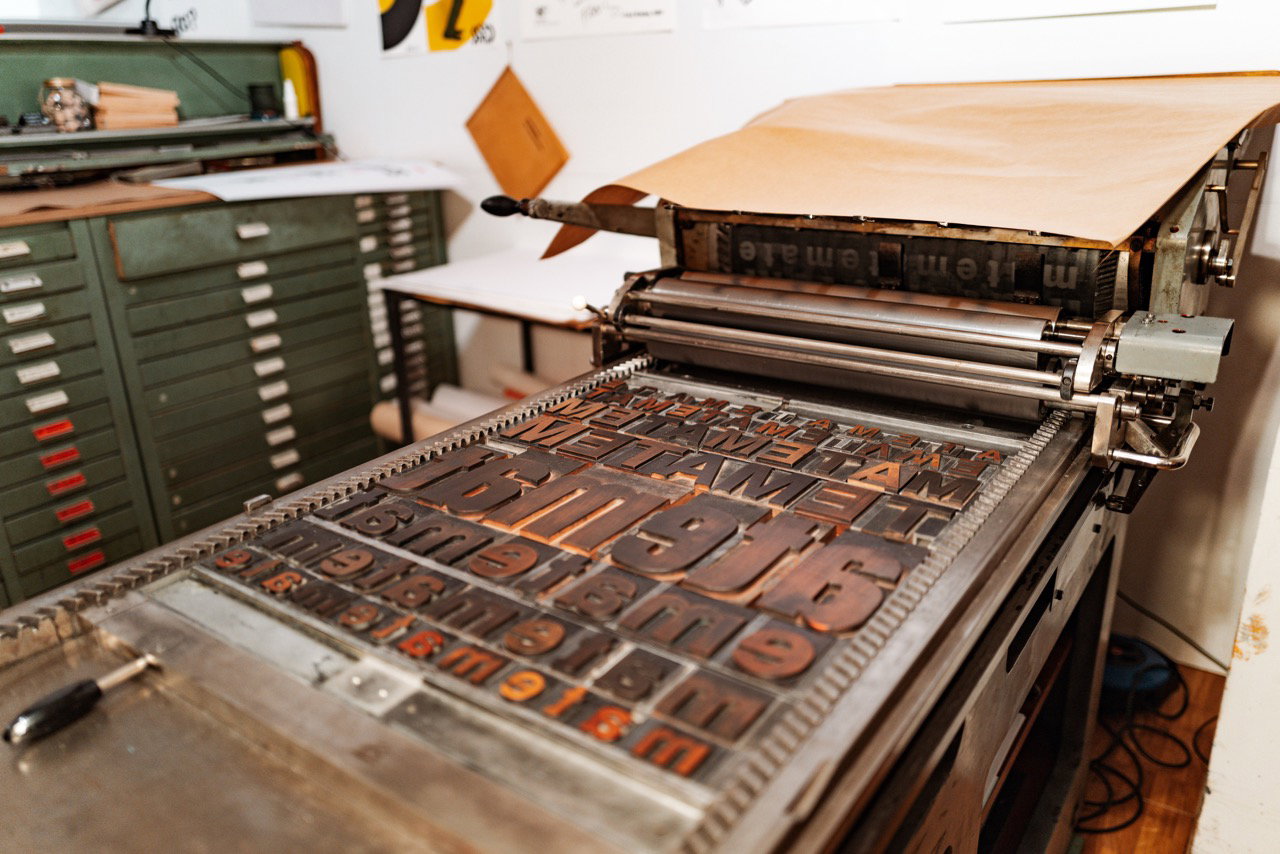
ATEM
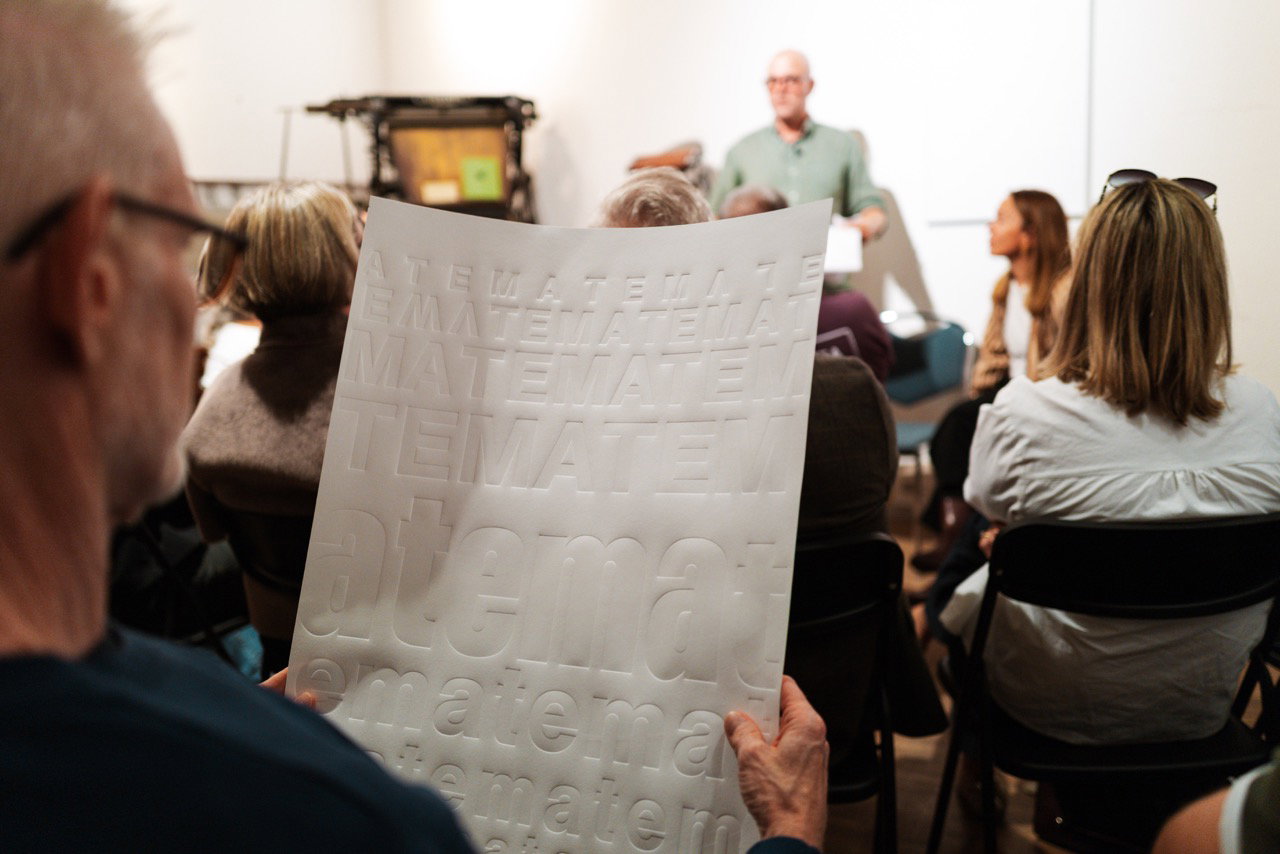
The word repeats itself line by line. The letters begin small and gradually grow larger, like breathing in. The lungs fill, and the space expands.
Then the movement reverses, and the letters become smaller again.
Breathing out.
A wave-like movement emerges. A rhythm of expansion and compression, of filling and letting go.
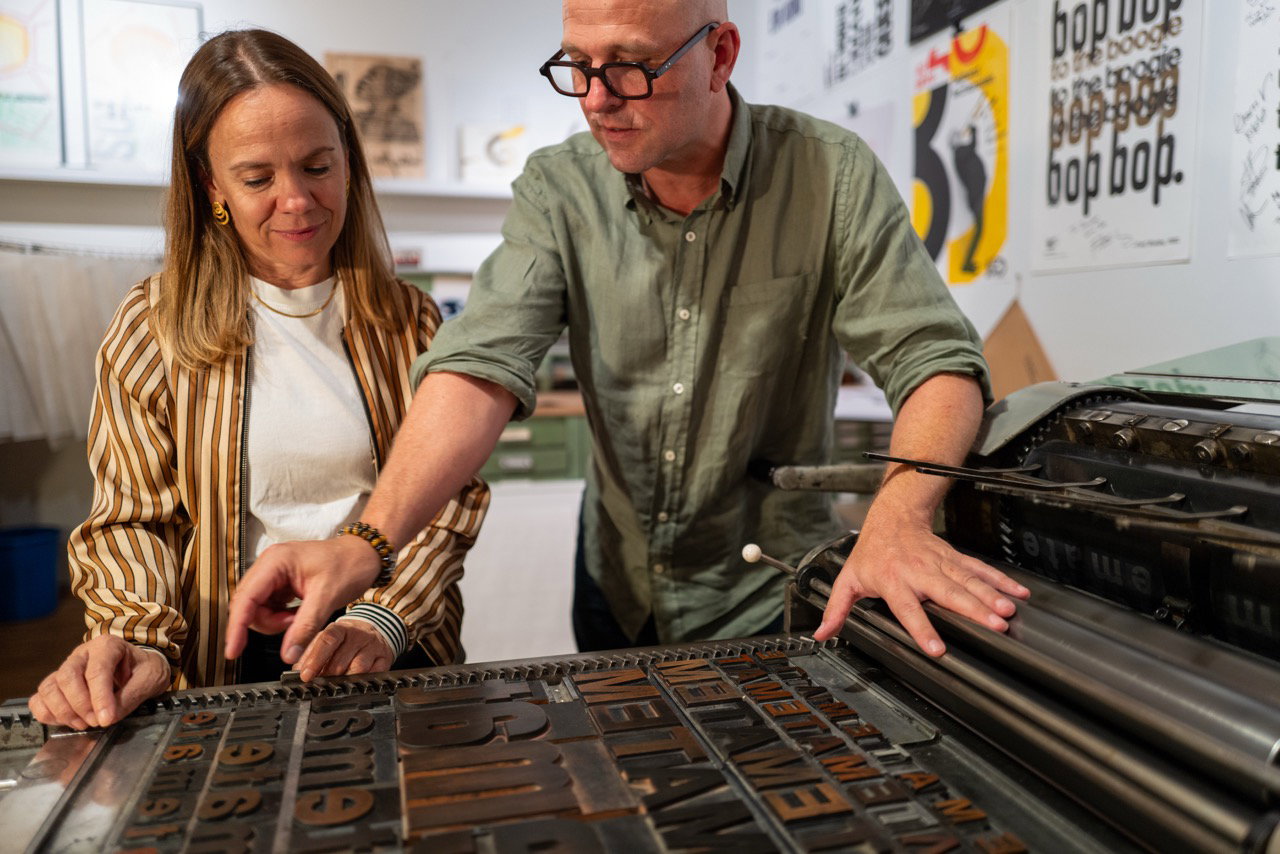
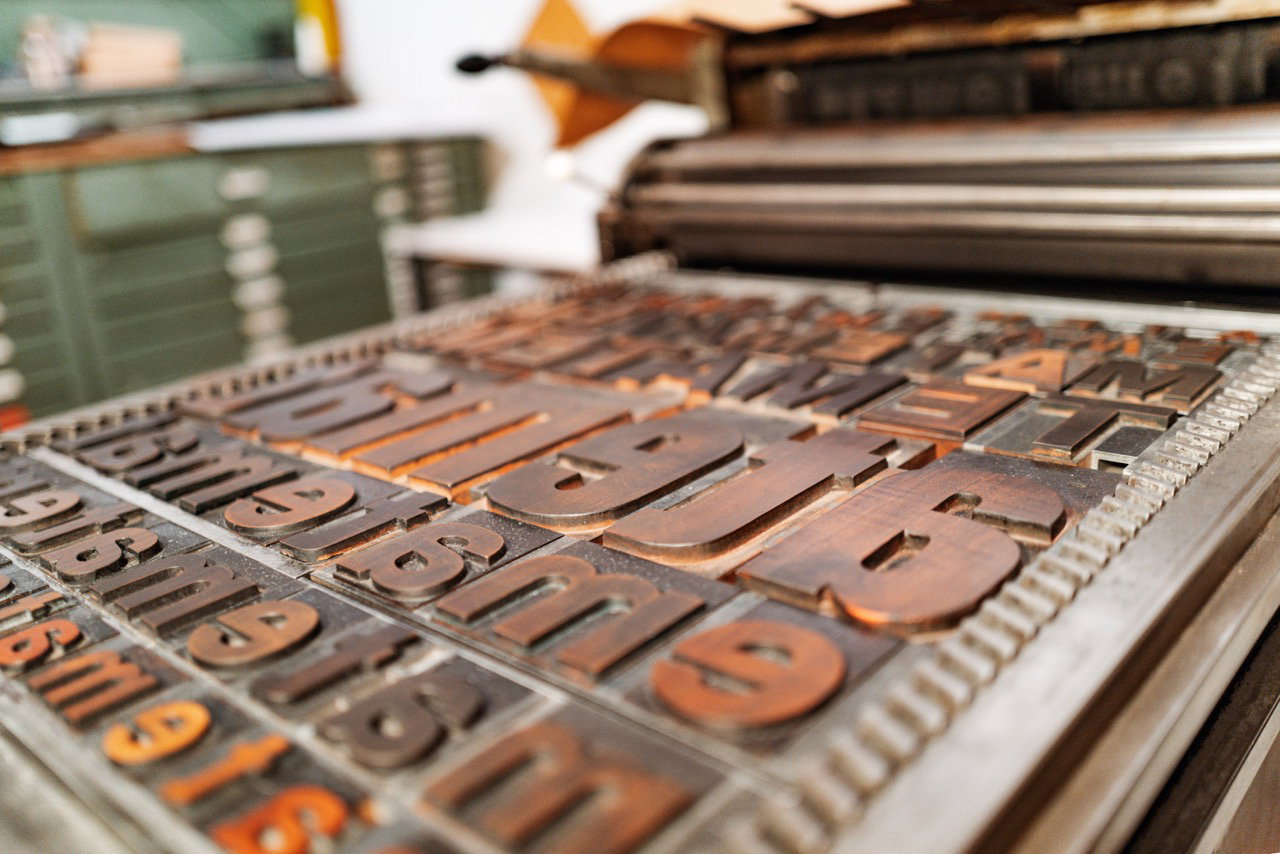
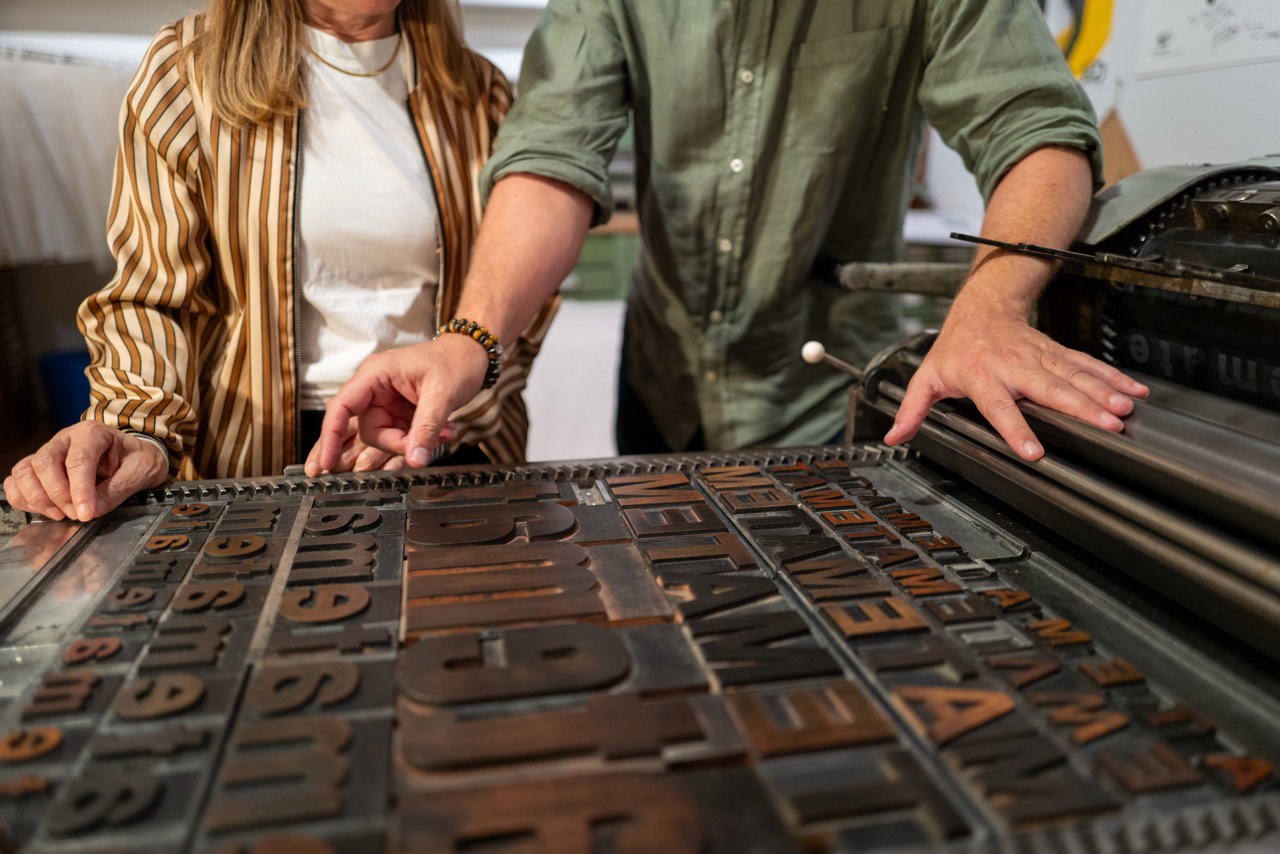
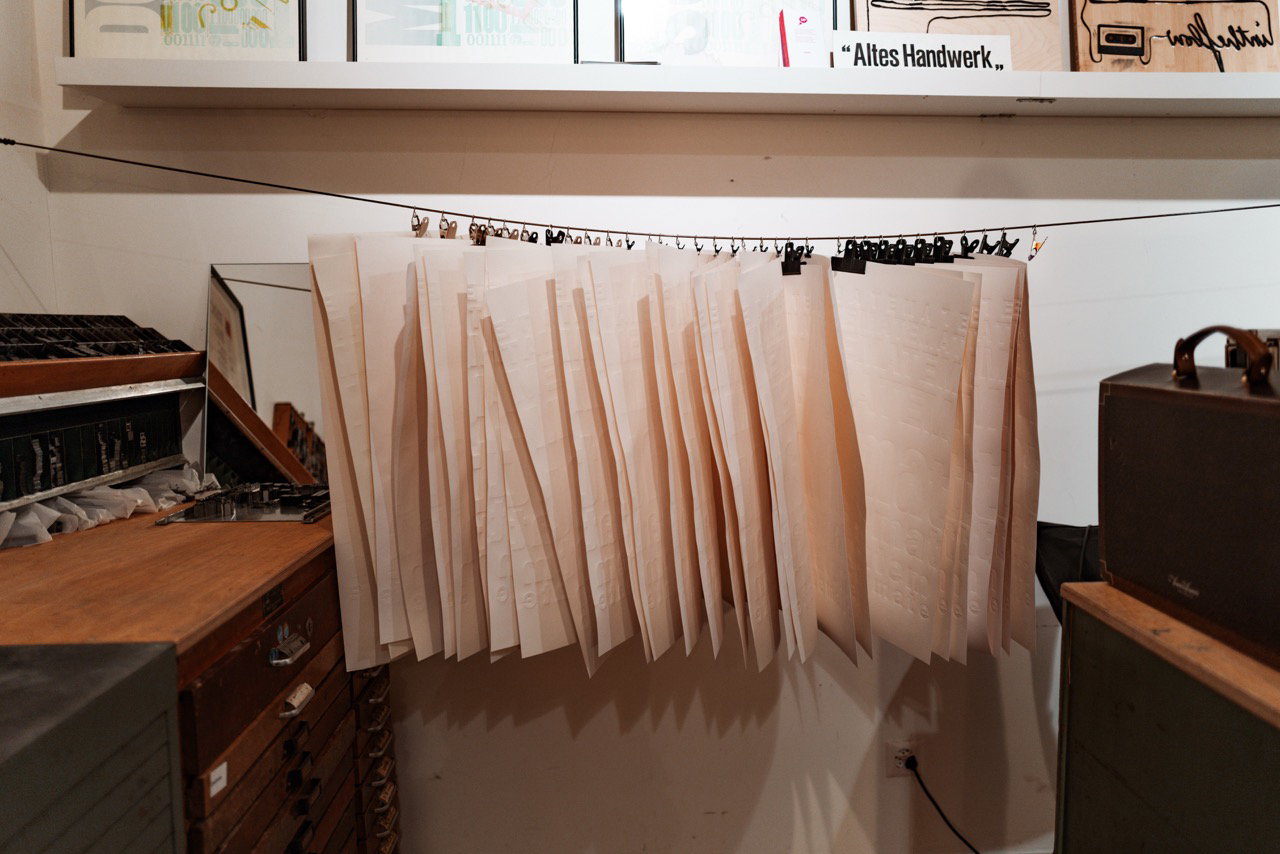
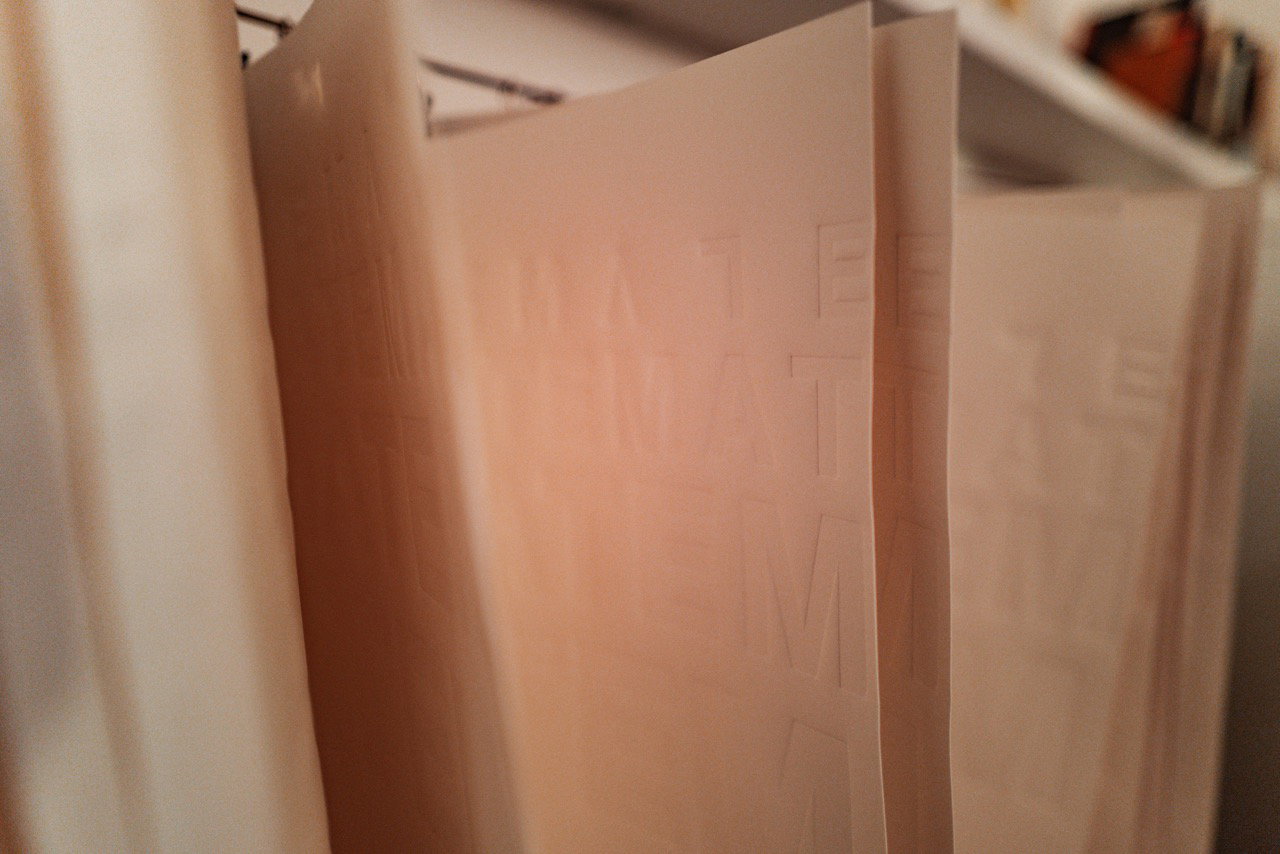
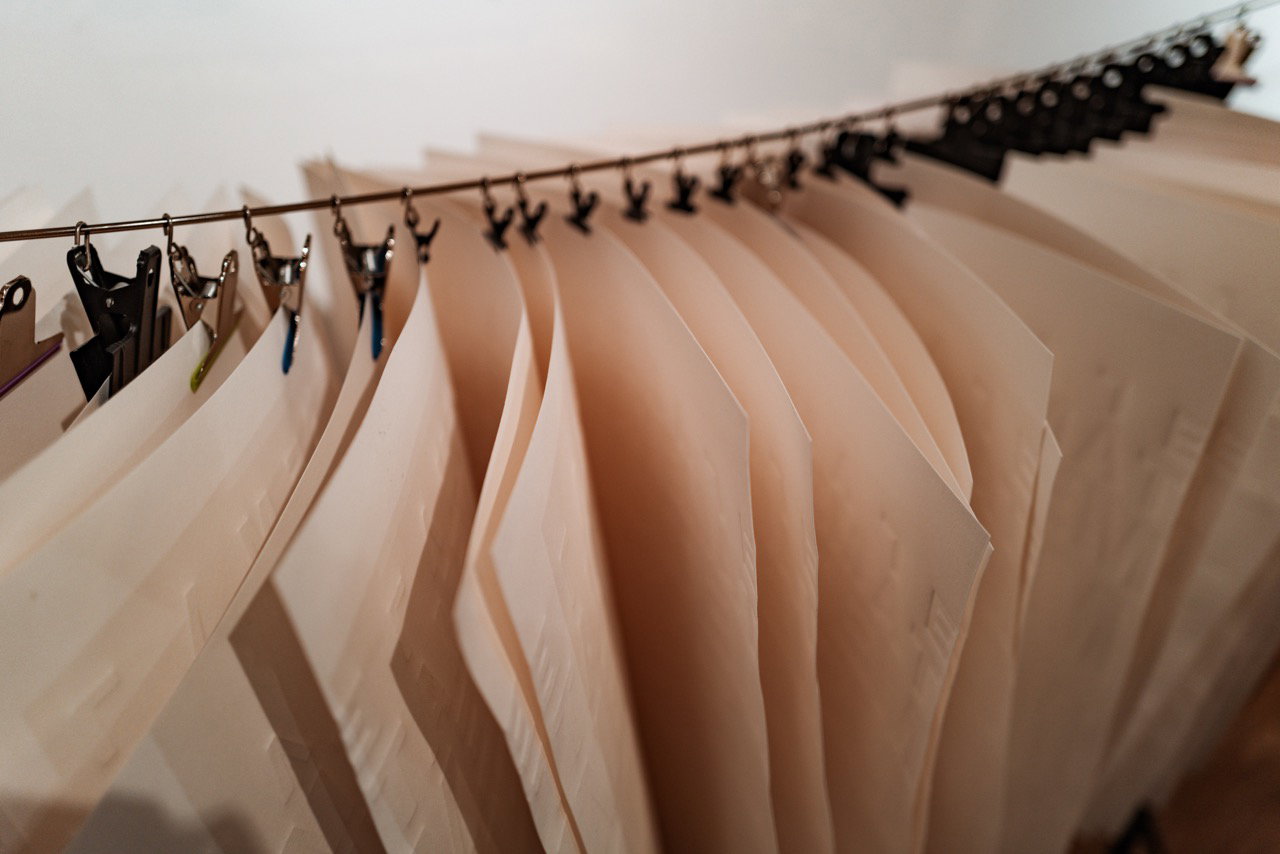
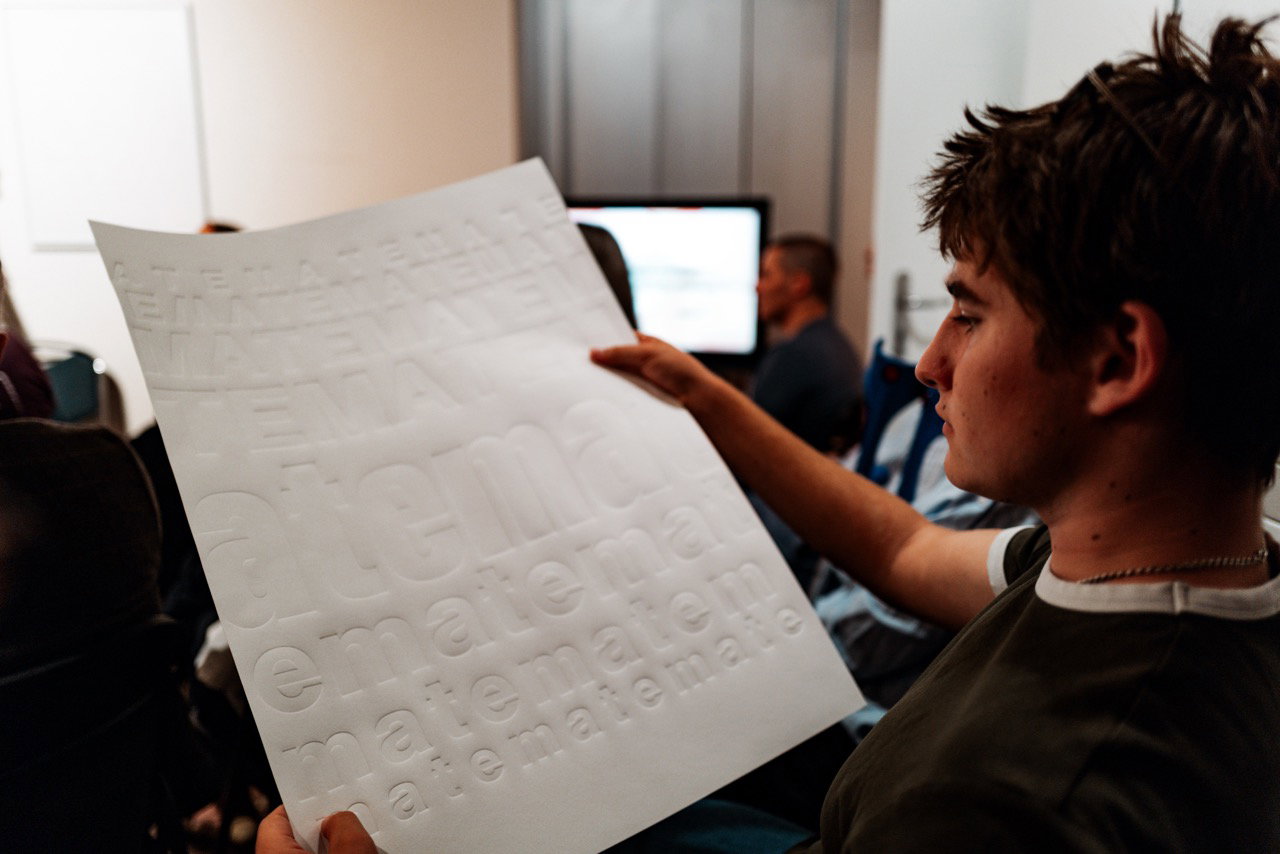
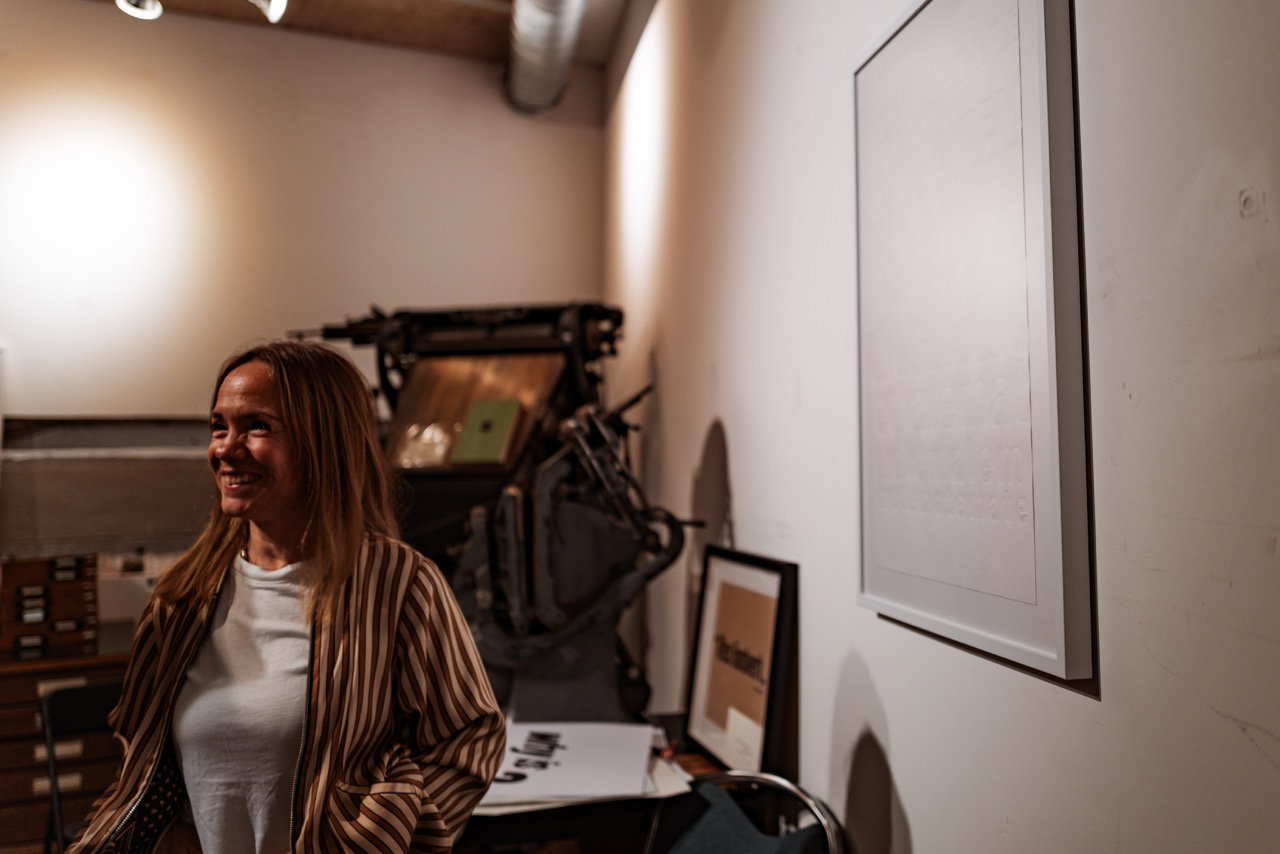
Next, we decided to remove colour entirely and instead deeply emboss the letters into the paper. They become visible through light and shadow and can be experienced through touch.
The paper gains a physical presence. You do not simply read the breath, you can almost feel it. Form becomes content, almost as if the paper itself were breathing.
Mutual Resonance
What touched me about Beate’s story was the realisation that being balanced does not necessarily mean resting calmly at one’s centre.
Balance often emerges when we move. When we allow different, sometimes even opposing, sides of ourselves to exist.
Beate’s movement between the inner world of her studio and encounters with other people, between thinking and making, between lightness and groundedness, showed me this in a very vivid way.
I recognised myself in it.
Especially in the connection between spirit and doing. Between reflecting on things and the desire to bring them into reality with my own hands.
Breath as an image also felt very immediate to me, because I experience it myself as a connection between inside and outside, between body and mind.
And so the search for Beate’s essence also became a reflection on my own.
Beyond the Session
Since our session, I have kept returning to the question of whether we too often understand balance as a state we are supposed to reach and then somehow hold onto.
But what if balance is not a state at all?
What if it only emerges through movement? Beate called it a kind of “wavering” between these balancing poles.
We do not breathe in once and stay there. We have to breathe out again in order to breathe in anew.
Without breath, there is no life. Without creativity, there is no life.
What keeps your inner generator moving?
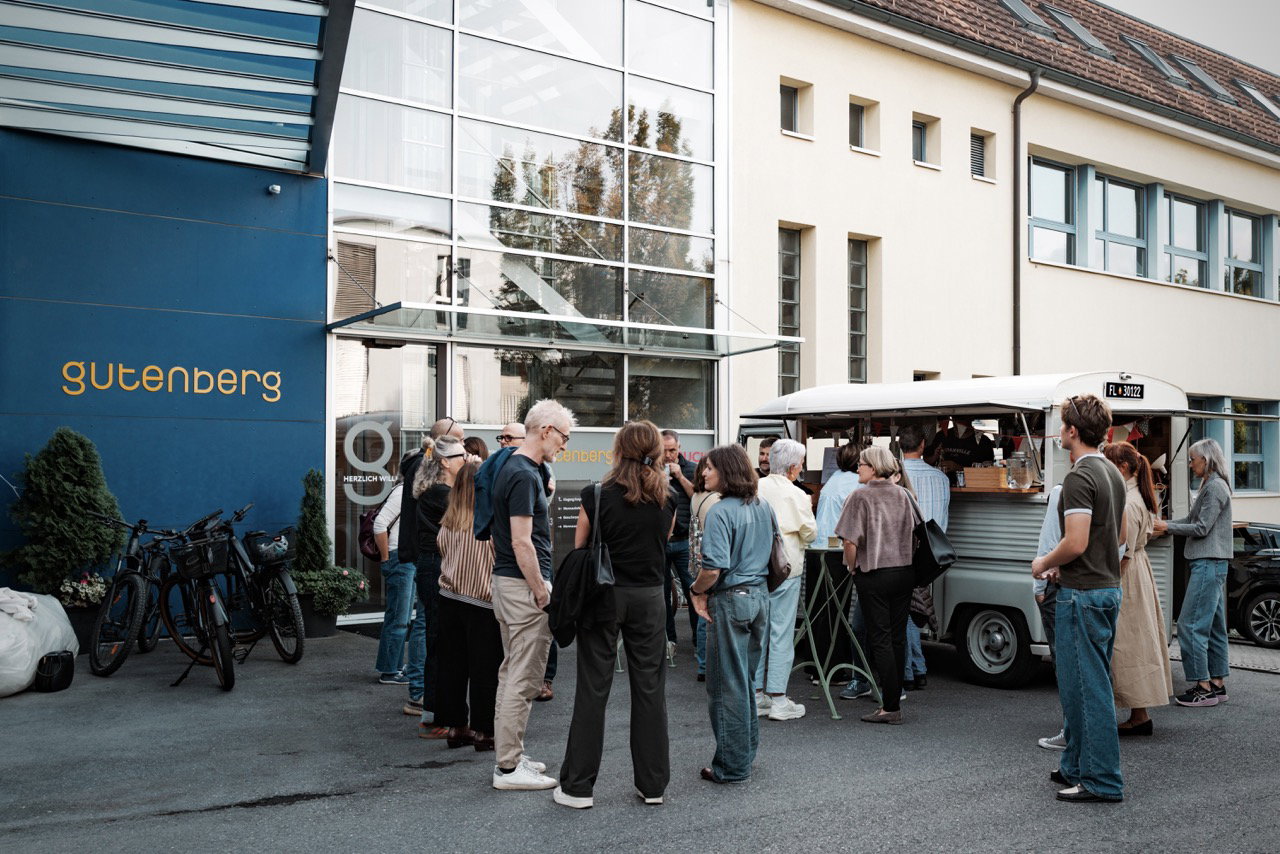

A.i.R. SESSION • 1–3 October 2026
Beate Frommelt
Artist · Zurich / Liechtenstein
Beate’s work moves between drawing, printmaking, installation and object art.
We are particularly interested in how she makes relationships, memory and transformation visible through remarkably simple means.
Resonance Question:
How can relationships be made tangible?
With the kind support of
Kulturstiftung Liechtenstein
Accurata AG
Fürst Franz Josef von Liechtenstein Stiftung